
INTRODUCTION
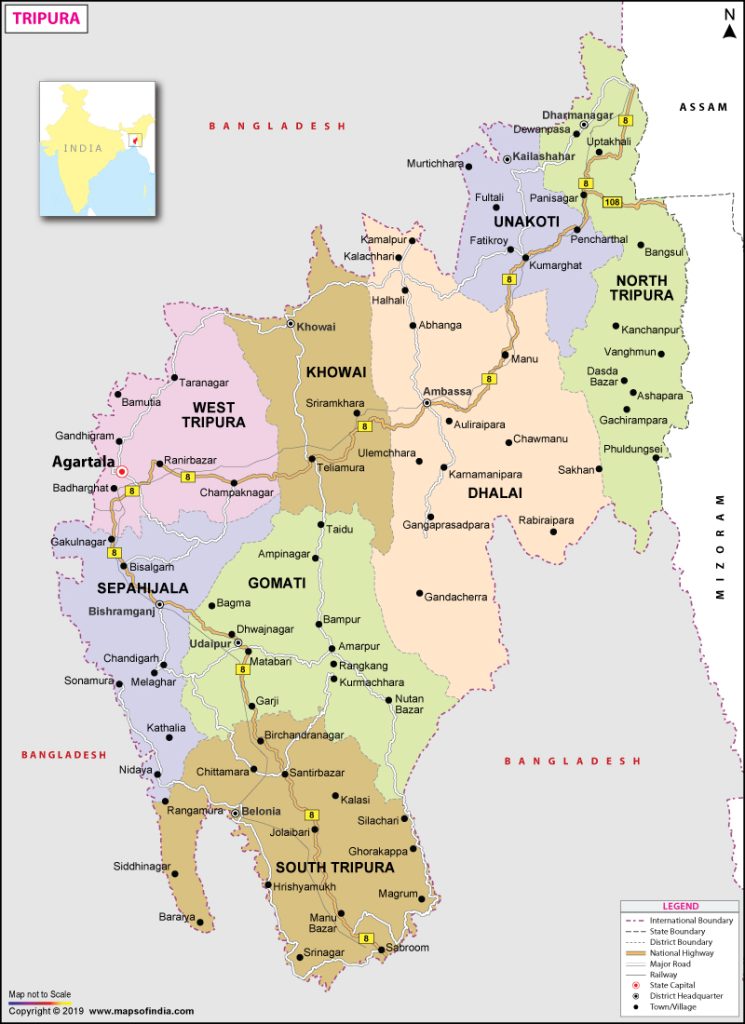
Tripura is a state in northeastern India. The third- lowest state in the country, it covers 2km( sq mi) and is framed by Bangladesh to the north, south, and west, and the Indian countries of Assam and Mizoram to the east. In 2011 the state had residers, constituting0.3 of the country’s population.
The area of ultramodern Tripura — ruled for several centuries by the Manikya Dynasty was part of an independent kingly state under the mandate of the British Empire. The independent Tripuri Kingdom( also known as Hill Tippera) joined the recently independent India in 1949.
Tripura lies in a geographically insulated position in India, as only one major trace, National Highway 8, connects it with the rest of the country. Five mountain ranges — Boromura, Atharamura, Longtharai, Shakhan, and Jampui Hills — run north to south, with intermediating denes
Agartala, the capital, is located on a plain to the west. The state has a tropical champaign climate and receives seasonal heavy rains from the southwest thunderstorm.
Timbers cover further than half of the area, in which bamboo and club tracts are common. Tripura has the loftiest number of primate species set up in any Indian state. Due to its geographical insulation, profitable progress in the state is hindered. Poverty and severance continue to persecute Tripura, which has a limited structure. utmost residers are involved in husbandry and confederated conditioning, although the service sector is the largest contributor to the state’s gross domestic product.
According to the 2011 tale, Tripura is one of the most knowledgeable countries in India, with a knowledge rate of87.75. Mainstream Indian artistic rudiments attend with traditional practices of the ethnical groups, similar to colorful balls to celebrate religious occasions, marriages, and fests; the use of locally crafted musical instruments and clothes; and the deification of indigenous divinities. The puppets at the archaeological spots Unakoti, Pilak, and Devtamura give literal substantiation of a cultural emulsion between systematized and indigenous persuasions.
ETYMOLOGY
The name Tripura is linked to the Hindu goddess Tripura Sundari, the presiding deity of the Tripura Sundari Temple at Udaipur, one of the 51 Shakti Peethas( passage centres of Shaktism), and to the fabulous dictator king Tripur, who reigned in the region. Tripur was the 39th assignee of Druhyu, who belonged to the lineage of Yayati, a king of the Lunar Dynasty.
There are indispensable propositions regarding the origin of the name Tripura, similar as a possible etymological reinterpretation to Sanskrit of a Tibeto- Burman( Kokborok) name. Variants of the name include Tipra, Tuipura and Tippera, which can all denote the indigenous people inhabiting the area. A Kokborok etymology from tüi( water) and pra( near) has been suggested; the boundaries of Tripura extended to the Bay of Bengal when the lords of the Tipra Kingdom held sway from the Garo Hills of Meghalaya to Arakan, the present Rakhine State of Burma; so the name may reflect vicinity to the ocean.
HISTORY
Although there’s no substantiation of lower or middle Paleolithic agreements in Tripura, Upper Paleolithic tools made of reactionary wood have been set up in the Haora and Khowai denes. The Indian epic, the Mahabharata; ancient religious textbooks, the Puranas; and the fiats of Ashoka – gravestone pillar eulogies of the emperor Ashoka dating from the third century BCE – all mention Tripura. An ancient name of Tripura( as mentioned in the Mahabharata) is Kirat Desh( English” The land of Kirat”), presumably pertaining to the Kirata fiefdoms or the more general term Kirata.155 still, it’s unclear whether the extent of ultramodern Tripura is coterminous with Kirat Desh. The region was under the rule of the Twipra Kingdom for centuries, but when this dynasty began isn’t proved. The Rajmala, a chronicle of Tripuri lords which was first written in the 15th century, provides a list of 179 lords, from age up to Krishna Kishore Manikya( 1830 – 1850),but it isn’t a dependable source.
Neermahal Palace is the royal palace erected by Bir Bikram Kishore Debbarman of the Kingdom of Tripura.
The boundaries of the area changed over the centuries. At colorful times, the borders reached south to the jungles of the Sundarbans on the Bay of Bengal; east to Burma; and north to the boundary of the Kamarupa area in Assam.There were several Muslim irruptions of the region from the 13th century onward,which crowned in Mughal dominance of the plains of the area in 1733, although their rule noway extended to the hill regions. The Mughals told the appointment of the Tripuri lords.
Queen Kanchan Prabha Devi who inked the instrument of accession to India as chairman of the Council of Regency.
Tripura came a kingly state during British rule in India. The lords had an estate in British India, known as Tipperary quarter or Chakla Roshnabad( now the Comilla quarter of Bangladesh),in addition to the independent area known as Hill Tippera, roughly corresponding to the present- day Tripura state. Udaipur, in the south of Tripura, was the capital of the area, until the king, Krishna Manikya moved the capital to Old Agartala in the 18th century. It was moved to the new megacity of Agartala in the 19th century. Bir Chandra Manikya( 1862 – 1896) modeled his administration on the pattern of British India, and legislated reforms including the conformation of the Agartala Municipal Corporation.
Post-independence( 1947-present)
Following the independence of India in 1947, the Tipperary quarter – the estate in the plains of British India – came the Comilla quarter of East Pakistan, and Hill Tipperary remained under a regency council until 1949. The Maharani Regent of Tripura inked the Tripura Merger Agreement on 9 September 1949, making Tripura a Part C state of India. 3 It came a Union Territory, without a council, in November 1956, and an tagged ministry was installed in July 1963. 3 It was conferred full statehood in 1971 by the North- Eastern Areas( Reorganisation) Act, 1971. The geographic partition that coincided with the independence of India redounded in major profitable and infrastructural lapses for the state, as road transport between the state and the major metropolises of the recently-independent India had to follow a further circuitous route, around East Pakistan. The road distance between Kolkata and Agartala before the partition was lower than 350 km( 220 mi), and increased to,700 km(,100 mi), as the route now avoided East Pakistan.The geopolitical insulation was exacerbated by an absence of rail transport. 93
After the partition of India, numerous Bengali Hindus migrated to Tripura as deportees fleeing religious persecution in Muslim- maturity East Pakistan, especially after 1949. 3 – 4 agreement by Hindu Bengalis increased during the Bangladesh Liberation War of 1971. corridor of the state were shelled by the Pakistan Army during the Indo- Pakistani War of 1971. Following the war, the Indian government reorganized the North East region to insure effective control of the transnational borders – three new countries came into actuality on 21 January 1972 Meghalaya, Manipur, and Tripura. Before independence, utmost of the population was indigenous. 9 Ethnical strife between the Tripuri lineage and the generally indigenous Bengali community led to scattered violence, and an insurrection gauging decades, including occasional butcheries similar as the 1980 Mandai butchery. This gradationally abated following the establishment of a ethnical independent quarter council and the use of strategic counter-insurgency operations. Tripura remains peaceful, as of 2016. In retribution for the collaborative violence against the Hindu nonage in bordering Bangladesh, kirks in several areas in Tripura were attacked from 19 to 26 October 2021.
GEOGRAPHY
Tripura is a landlocked state in North East India, where the seven conterminous countries – Arunachal Pradesh, Assam, Manipur, Meghalaya, Mizoram, Nagaland, and Tripura – are inclusively known as the Seven Sister States. Spread over km2( sq mi), Tripura is the third- lowest among the 29 countries in the country, behind Goa and Sikkim. It extends from 22 ° 56’N to 24 ° 32’N and 91 ° 09′ E to 92 ° 20’E. 3 Its maximum extent measures about 178 km( 111 mi) from north to south, and 131 km( 81 mi) from east to west. Tripura is framed by the country of Bangladesh to the west, north and south; the Indian countries of Assam to the northeast; and Mizoram to the east. 3 It’s accessible by public roadways passing through the Karimganj quarter of Assam and Mamit quarter of Mizoram.
Geomorphology:
The physiography is characterized by hill ranges, denes
, and plains. The state has five anticlinal ranges of hills running north to south, from Boromura in the west, through Atharamura, Longtharai, and Shakhan, to the Jampui Hills in the east. 4 The intermediating synclines are the Agartala – Udaipur, Khowai – Teliamura, Kamalpur – Ambasa, Kailasahar – Manu, and Dharmanagar – Kanchanpur denes
. 4 At an altitude of 939 m(,081 ft), Betling Shib in the Jampui range is the state’s loftiest point. 4 The small insulated hillocks interspersed throughout the state are known as tillas, and the narrow rich alluvial denes, substantially present in the west, are called Doóng/ lungas. 4 Several gutters appear in the hills of Tripura and flow into Bangladesh. 4 The Khowai, Dhalai, Manu, Juri, and Longan inflow towards the north; the Gumti to the west; and the Muhuri and Feni to the southwest. 73
The lithostratigraphy data published by the Geological Survey of India dates the jewels, on the geologic time scale, between the Oligocene time, roughly 34 to 23 million times agone
, and the Holocene time, which started,000 times agone
. 73 – 4 The hills have red laterite soil that’s pervious. The flood tide plains and narrow denes
are overlain by alluvial soil, and those in the west and south constitute utmost of the agrarian land.4 According to the Bureau of Indian norms, on a scale ranging from I to V in order of adding vulnerability to earthquakes, the state lies in seismic zoneV.
Climate:
The state has a tropical champaign climate, designated Aw under the Köppen climate bracket. The undulating geomorphology leads to original variations, particularly in the hill ranges. The four main seasons is downtime, from December to February; pre-monsoon or summer, from March to April; thunderstorm, from May to September; and post-monsoon, from October to November. During the thunderstorm season, the southwest thunderstorm brings heavy rains, which beget frequent. The average periodic downfall between 1995 and 2006 ranged from to mm(77.94 to108.11 in). During downtime, temperatures range from 13 to 27 °C( 55 to 81 °F), while in the summer they fall between 24 and 36 °C( 75 and 97 °F).( 37) According to a United Nations Development Programme report, the state lies in a” veritably high damage threat” zone from wind and cyclones.
ADMINISTRATIVE DIVISIONS
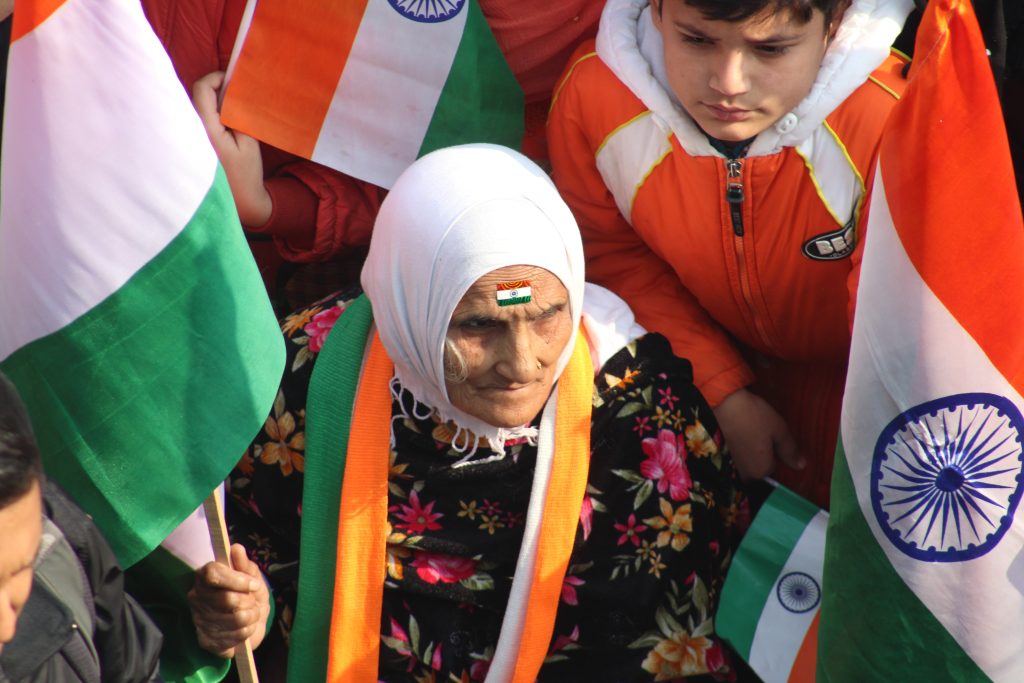
In January 2012, major changes were enforced in the executive divisions of Tripura. There had preliminarily been four sections – Dhalai( headquarters Ambassa), North Tripura( headquarters Kailashahar), South Tripura( headquarters Udaipur, Tripura), and West Tripura( headquarters Agartala).
Four new sections were sculpted out of the being four in January 2012 – Khowai, Unakoti, Sipahijala, and Gomati. Six new services and five new blocks were also added. Each is governed by a quarter collector or a quarter justice, generally appointed by the Indian Administrative Service. The services of each quarter are governed by a sub-divisional justice and each branch is further divided into blocks. The blocks correspond of Panchayats and city cosmopolises. As of 2012, the state had eight sections, 23 services, and 58 development blocks. public tale and state statistical reports aren’t available for all the new executive divisions, as of March 2013.
Agartala, the capital of Tripura, is the most vibrant megacity. Other major municipalities with a population of,000 or further are Sabroom, Dharmanagar, Jogendranagar, Kailashahar, Pratapgarh, Udaipur, Amarpur, Belonia, Gandhigram, Kumarghat, Khowai, Ranirbazar, Sonamura, Bishalgarh, Teliamura, Mohanpur, Melaghar, Ambassa, Kamalpur, Bishramganj, Kathaliya, Santirbazar, and Baxanagar.
GOVERNMENT & POLITICS
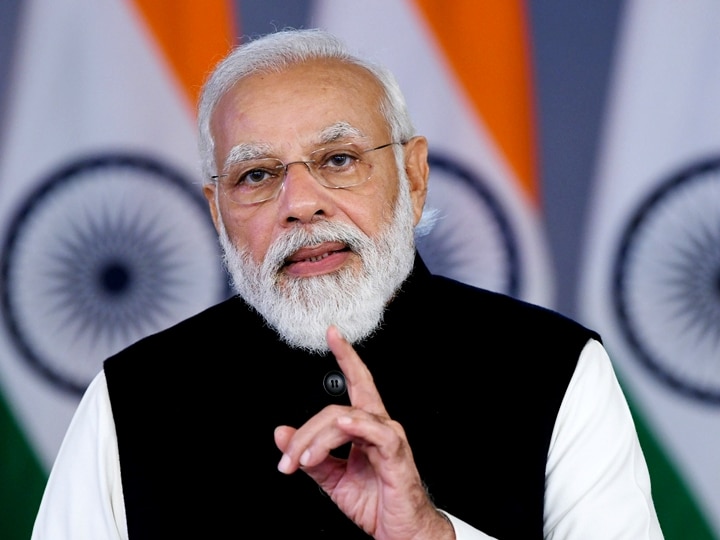
Tripura is governed through a administrative system of representative republic, a point it shares with other Indian countries. Universal franchise is granted to residers. The Tripura government has three branches superintendent, council and bar. The Tripura Legislative Assembly consists of tagged members and special office liaisons that are tagged by the members. Assembly meetings are presided over by the Speaker or the Deputy Speaker in case of Speaker’s absence. The Assembly is unicameral with 60 Members of the Legislative Assembly( MLA).The members are tagged for a term of five times, unless the Assembly is dissolved previous to the completion of the term. The bar is composed of the Tripura High Court and a system of lower courts.
Administrative authority is vested in the Council of Ministers headed by the Chief Minister. The Governor, the nominal head of state, is appointed by the President of India. The leader of the party or a coalition of parties with a maturity in the Legislative Assembly is appointed as the chief minister by the governor. The Council of Ministers are appointed by the governor on the advice of the chief minister. The Council of Ministers reports to the Legislative Assembly.
Tripura ethnical Areas Autonomous District Council, pictured, encompasses much of the state
Tripura sends two representatives to the Lok Sabha( the lower house of the congress of India) and one representative to the Rajya Sabha( congress’s upper house). In the 2014 Indian general election, both congress lower house seats were won by the Communist Party of India( Marxist). Panchayats( original tone- governments) tagged by original body choices are present in numerous townlets for tone- governance. Tripura also has a unique ethnical tone- governance body, the Tripura Tribal Areas Autonomous District Council. This council is responsible for some aspects of original governance in 527 townlets with high viscosity of the listed lines.
The main political parties are the Bharatiya Janata Party( BJP), the Left Front, the All India Trinamool Congress and Indian National Congress along with indigenous parties like the IPFT and INPT. Until 1977, the state was governed by the Indian National Congress. 255 – 66 The Left Front was in power from 1978 to 1988, and also again from 1993 to 2018. In 1988 – 93, the Congress and Tripura Upajati Juba Samiti were in a ruling coalition. In the 2013 Tripura Legislative Assembly election, the Left Front won 50 out of 60 seats in the Assembly. The 2018 assembly election redounded in loss for the Left Front; the Bharatiya Janata Party won an overall maturity in the state, performing in the end of the Communist Party’s continued twenty- five time rule.The BJP won 44 out of 60 seats in the Assembly by coalition with the IPFT. The CPI( M) only got 16 seats and Indian National Congress lost by huge perimeters in all constituencies.
Communism in the state had its onsets in thepre-independence period, inspired by freedom struggle conditioning in Bengal, and climaxing in indigenous parties with communist leanings. 362 It capitalised on the ethnical dissatisfaction with the mainstream autocrats, 362 and has been noted for connection with the”sub-national or ethnical quests for identity”.
Since the 1990s, there has been an ongoing irredentist Tripura rebellion, involving militant outfits similar as the National Liberation Front of Tripura and the All Tripura Tiger Force( ATTF); terrorist incidents involving the ATTF claimed a recorded number of 389 victims in the seven- time period from 1993 to 2000. The Armed Forces( Special Powers) Act, 1958( AFSPA) was first executed in Tripura on 16 February 1997 when terrorism was at its peak in the state. Ever since also, the Act, as per its vittles, was reviewed and extended every six months. still, in view of the enhancement in the situation and smaller terrorist conditioning being reported, the Tripura government in June 2013 reduced functional areas of the AFSPA to 30 police station areas. The last six- month extension to AFSPA was given in November 2014, and after about 18 times of operation, it was repealed on 29 May 2015.
ECONOMY
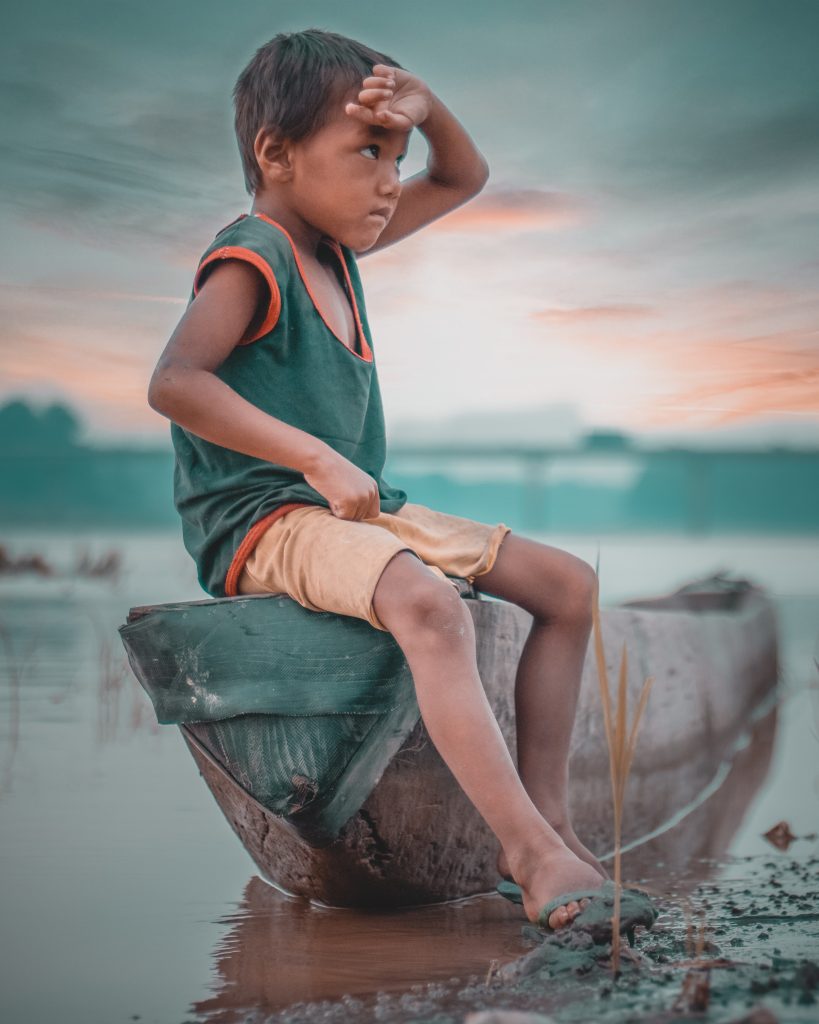
Tripura’s gross state domestic product for 2010 – 11 was ₹129.47 billion(US$1.6 billion) at the constant price( 2004 – 05), recording5.71 growth over the former time. In the same period, the GDP of India was ₹ billion(US$ 610 billion), with a growth rate of8.55. Periodic per capita income at the current price of the state was ₹,493(US$ 480), compared to the public per capita income of ₹,345(US$ 560). In 2009, the tertiary sector of frugality( service diligence) was the largest contributor to the gross domestic product of the state, contributing53.98 percent of the state’s frugality compared to23.07 percent from the primary sector( husbandry, forestry, mining) and22.95 percent from the secondary sector( artificial and manufacturing). According to the Economic Census of 2005, after husbandry, the maximum number of workers were engaged in retail trade, followed by manufacturing, public administration, and education
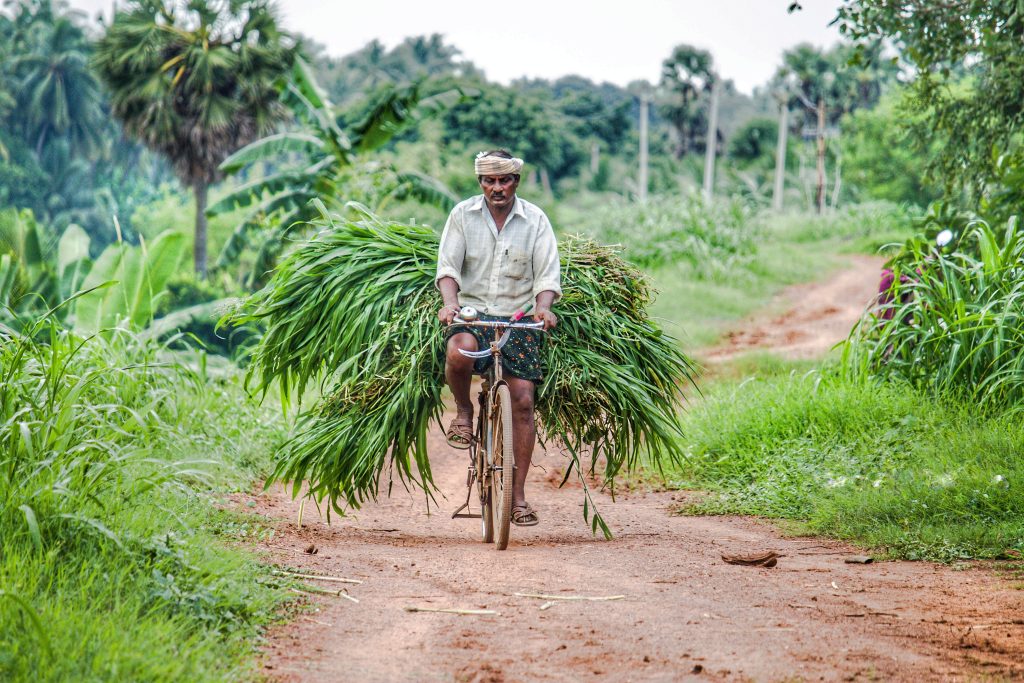
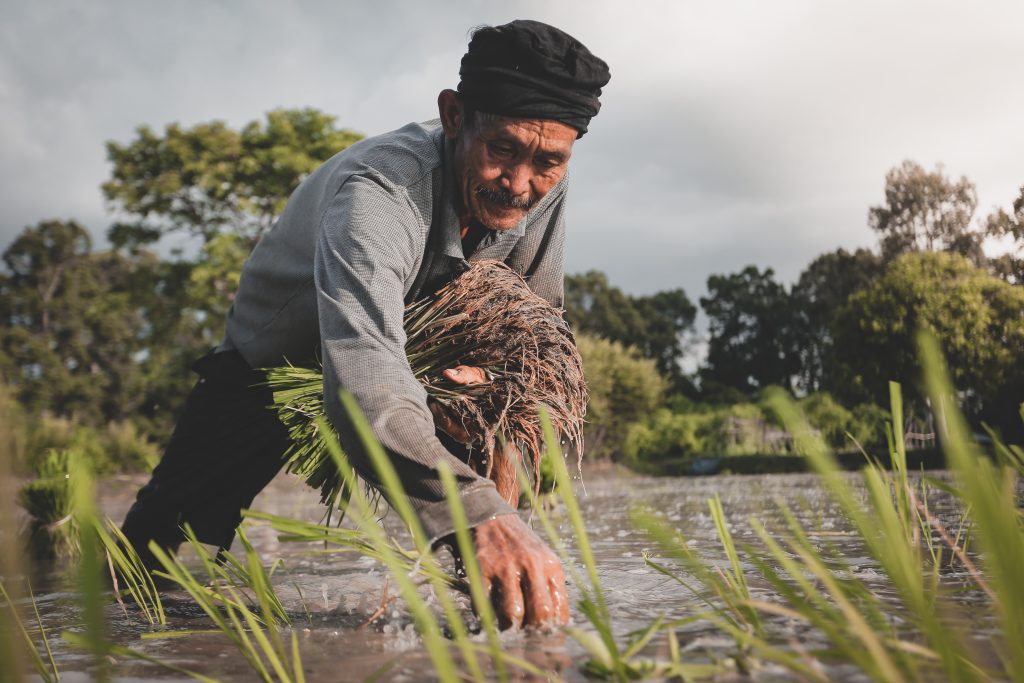
Tripura is an agricultural state with further than half of the population dependent on husbandry and confederated conditioning. still, due to hilly terrain and timber cover, only 27 of the land is available for civilization. Rice, the major crop of the state is cultivated in 91 of the cropped area. According to the Directorate of Economics & Statistics, Government of Tripura, in 2009 – 10, potato, sugarcane, mesta, beats, and jute were the other major crops cultivated in the state. ( Jackfruit and pineapple top the list of horticultural products. Traditionally, the utmost of the indigenous population rehearsed the jhum system( a type of rent- and- burn) of civilization. The number of people dependent on jhum has declined over times.
Green paddy field with many hooches at a distance
Rice is the major crop in Tripura and accounts for 91 percent of the land under civilization.
Pisciculture has made significant advances in the state. At the end of 2009 – 10, the state produced a fat of104.3 million fish seeds, primarily complaint. Rubber and tea are the important cash crops of the state. Tripura ranks second to Kerala in the product of natural rubber in the country. The state is known for its handcraft, particularly hand- woven cotton fabric, wood busts, and bamboo products. High- quality timber including sal, garjan, teak, and gamar are set up abundantly in the timbers of Tripura. Tata Trusts inked a pact with the Government of Tripura in July 2015 to ameliorate fisheries and dairy in the state.
The frugality of Tripura can be characterized by a high rate of poverty, low capital conformation, shy structure installations, geographical insulation and communication backups, shy disquisition and use of timber and mineral coffers, slow industrialization, and high severance. further than 50 of the population depends on husbandry for sustaining their livelihood.( 84) However husbandry and confederated conditioning’ donation to Gross State Domestic Production( GSDP) is only 23, this is primarily because of the low capital base in the sector. Despite the essential limitation and constraints coupled with severe resource dearths for investing in introductory structure, this has brought harmonious progress in the quality of life and income of people cutting across all sections of society. The state government through its Tripura Industrial Policy and Tripura Industrial Incentives Scheme, 2012, has offered heavy subventions in capital investment and transport, preferences in government procurement, quitclaims in tender processes and freights, yet the impact has not been important significant beyond a many diligence being set up in the Bodhjungnagar Industrial Growth Center.
The Planning Commission estimates the poverty rate of all North East Indian countries by using the headcount rate of Assam( the second largest state in North East India after Arunachal Pradesh). According to the 2001 Planning Commission assessment, 22 percent of Tripura’s pastoral residers were below the poverty line. still, the Tripura government’s independent assessment, grounded on consumption distribution data, reported that, in 2001, 55 percent of the pastoral population was below the poverty line. Geographic insulation and communication backups coupled with inadequate structure have confined the profitable growth of the state. The high rate of poverty and severance continues to be current.
TRANSPORT
Maharaja Bir Bikram Airport
Maharaja Bir Bikram Airport, located 12 km northwest of Agartala at Singerbhil, is the alternate busiest field in northeast India after Guwahati. There are direct breakouts to Kolkata, Imphal, Delhi, Shillong, Guwahati, Bangalore, Dibrugarh, Aizawl, Ahmedabad and Mumbai. The major airlines are flybig, Air India and IndiGo. Passenger copter services are available between the capital and major municipalities( Kailashahar, Dharmanagar) as well as to further remote areas similar as Kanchanpur, Belonia and Gandacherra.
Agartala Railway Station
Agartala, came on India’s road chart with the arrival of the railroads in the key in 1853 but the link was broken when India was partitioned in 1947. road service was established in Tripura in 1964 by constructing,000 mm( 3 ft 33⁄8 in) metre hand track from Lumding in Assam to Dharmanagar and Kailasahar in Tripura but the track didn’t connect the state capital Agartala. Rail transport was absent in the state until 2008 – 09 when the road track was extended to the capital Agartala.( 87) The metre hand rail track was connected to 5 ft 6 in(,676 mm) broad hand at Lumding. The major road stations in this line are in Agartala, Dharmanagar, and Kumarghat. This metre hand track was converted to,676 mm( 5 ft 6 in) broad hand in 2016 and now trains run from Agartala to Kolkata and Delhi. The total length of this road track in Tripura state is 153 km. It’s a single line without electrification. The Agartala sabroom line was compled and completely functional since 2019.
A new road line is being laid westwards from Agartala to Akhaura in Bangladesh. This will reduce the distance between Agartala and Kolkata by over 1000 km and give rail access to Chittagong harborage.
Some major runner trains operated from Agartala are-
Agartala- Anand Vihar Terminal Rajdhani Express
Agartala- Bengaluru Cantonment Humsafar Express
Agartala- Firozpur Cantonment Tripura Sundari Express
Agartala- Sealdah Kanchanjunga Express
Agartala- Deoghar Weekly Express
Agartala- Silchar Express
Agartala- Rani Kamplapati( Bhopal) Weekly Express
Agartala- Secunderabad Superfast Special
Agartala- Jiribam Janshatabdi Express
Agartala- Bengaluru Cantonment Superfast Special
Road : The border post between Bangladesh and India in Akhaura
Only one major road, the National Highway 8( NH- 8), connects Tripura to the rest of India. Starting at Sabroom in southern Tripura, it heads north to the capital Agartala, turns east and also north- east to enter the state of Assam. Locally known as” Assam Road”, the NH- 8 is frequently called the lifeline of Tripura. still, the trace is single lane and of poor quality; frequently landslides, rains or other dislocations on the trace cut the state off from its neighbours. Another National Highway, NH 108, connects the city Panisagar in North Tripura District with Aizawl, Mizoram. The Tripura Road Transport Corporation is the government agency overlooking public transport on road. A hilly and land- locked state, Tripura is dependent substantially on roads for transport. The total length of roads in the state is,931 km(,520 mi) of which public roadways constitute 88 km( 55 mi) and state roadways 689 km( 428 mi), as of 2009 – 10.( 87) residers in pastoral areas constantly use aqueducts as a mode of transport.
Tripura has an 856 km( 532 mi) long transnational border with Bangladesh, of which777.4 km(483.1 mi) is fended, as of 2012. Several locales along the border serve as bilateral trading points between India and Bangladesh, similar as Akhaura near Agartala, Raghna, Srimantpur, Belonia, Khowai and Kailasahar. A machine service exists between Agartala and Dhaka, the capital of Bangladesh. In 2013, the two countries inked an agreement to establish a 15 km(9.3 mi) road link between Agartala and the Akhaura junction of Bangladesh. Citizens of both countries need visa to fairly enter the other country; still, illegal movement and smuggling across the border are wide.
EDUCATION
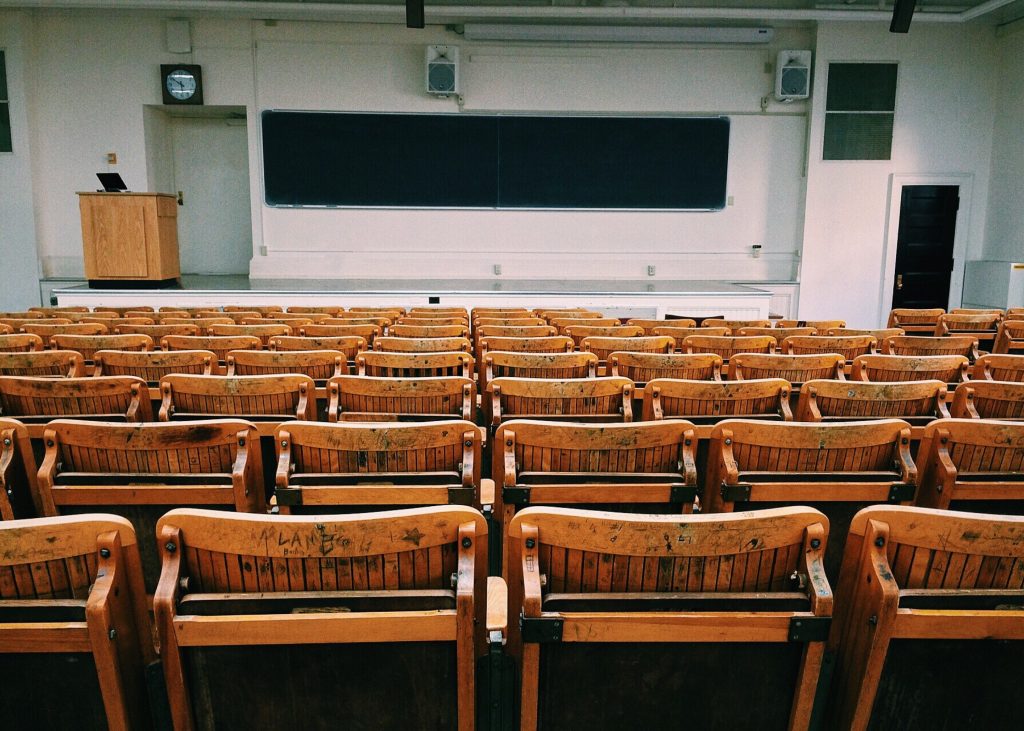
As per 2011 tale, the knowledge rate of Tripura was 87.75 percent, the fourth-loftiest in India ( which had a public knowledge rate of 74.04 percent). A state government check in 2013 blazoned that Tripura has the loftiest knowledge rate in India at 94.65 percent. seminaries in Tripura are run by the state government, TTAADC or private organisations, which include religious institutions. Instruction in seminaries is substantially in Bengali or English, though Kokborok and other indigenous languages are also used. Some of the special seminaries include Jawahar Navodaya Vidyalaya, Kasturba Gandhi Balika Vidyalaya, domestic seminaries run by Tripura Tribal Welfare Residential Educational Institutions Society( TTWREIS), missionary organisations like St. Paul’s, St. Arnold’s, Holy Cross, Don Bosco, and St. John’s. The seminaries are combined to the Council for the Indian School Certificate Examinations( CISCE), the Central Board for Secondary Education( CBSE), the National Institute of Open Schooling ( NIOS) or the Tripura Board of Secondary Education.
Under the 10 2 3 plan, after completing secondary academy, scholars generally enroll for two times in a inferior council or in a advanced secondary academy combined moreover to the Tripura Board of Secondary Education or to other central boards. scholars choose from one of the three aqueducts — liberal trades, commerce or wisdom. As in the rest of India, after passing the Advanced Secondary Examination( the grade 12 examination), scholars may enroll in general degree programs similar as bachelorette’s degree in trades, commerce or wisdom, or professional degree programs similar as engineering, law or drug.
According to the Economic Review of Tripura 2010 – 11, Tripura has a aggregate of,455 seminaries, of which,298 are primary seminaries. The total registration in all seminaries of the state is,672. Tripura has one Central University( Tripura University), one State University(M.B.B. University) and one private university( a branch of the Institute of Chartered Financial Judges of India). There are 15 general sodalities, three engineering sodalities( Tripura Institute of Technology, National Institute of Technology, Agartala and NIEILT, Agartala), two medical sodalities( Agartala Government Medical College and Tripura Medical College), three nursing or paramedical sodalities, three polytechnic sodalities, one law council, one Government Music College, one College of Fisheries, Institute of Advance Studies in Education, one Regional College of Physical Education at Panisagar and one art council.
HEALTHCARE
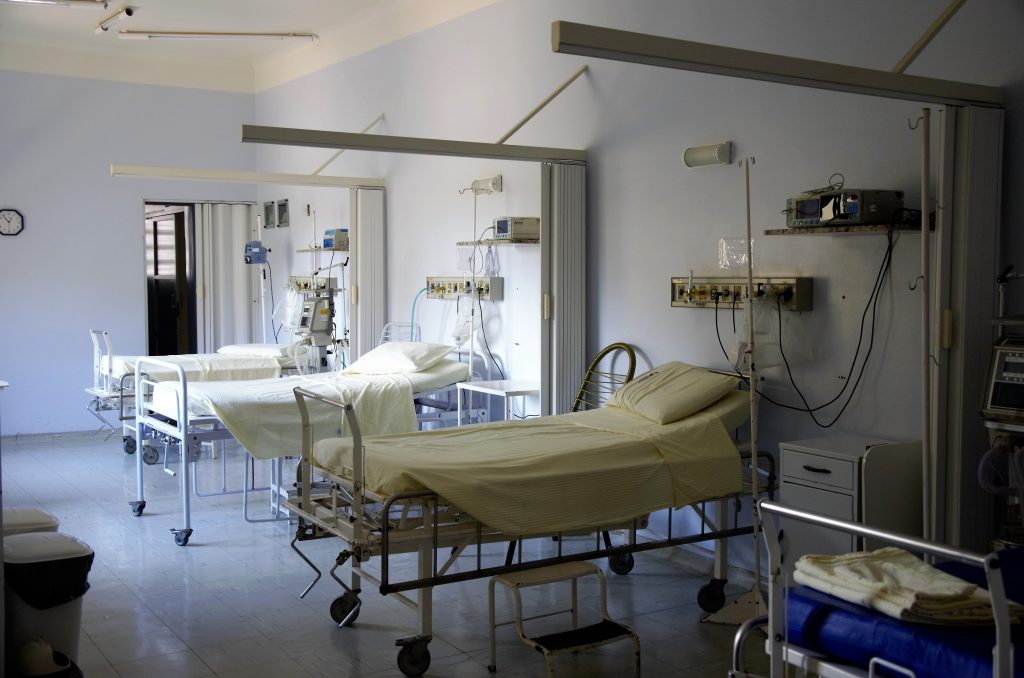
Healthcare in Tripura features a universal health care system run by the Ministry of Health & Family Welfare of the Government of Tripura. The health care structure is divided into three categories – the primary health care network, a secondary care system comprising quarter and sub-divisional hospitals, and tertiary hospitals furnishing things and super thing care. As of 2010 – 11, there are 17 hospitals, 11 pastoral hospitals, and community health centers, 79 primary health centers, 635 sub- centers/ drugstores, 7 blood banks, and 7 blood storehouse centers in the state.
Homeopathic and Ayurvedic styles of drugs are also popular in the state. The National Family Health Survey – 3 conducted in 2005 – 06 revealed that 20 of the residents of Tripura don’t generally use government health installations, and prefer the private medical sector. This is overwhelmingly lower than the public position, where65.6 don’t calculate government installations. As in the rest of India, Tripura residents also cite poor quality of care as the most frequent reason for non-reliance on the public health sector. Other reasons include the distance of the public sector installations, long staying time, and inconvenient hours of operation.
As of 2010, the state’s performance in major public health care indicators, similar to birth rate, child mortality rate, and the total fertility rate is better than the public normal The state is vulnerable to pandemics of malaria, diarrhea, Japanese encephalitis, and meningitis. In the summer of 2014, the state witnessed a major malaria outbreak.
CULTURE
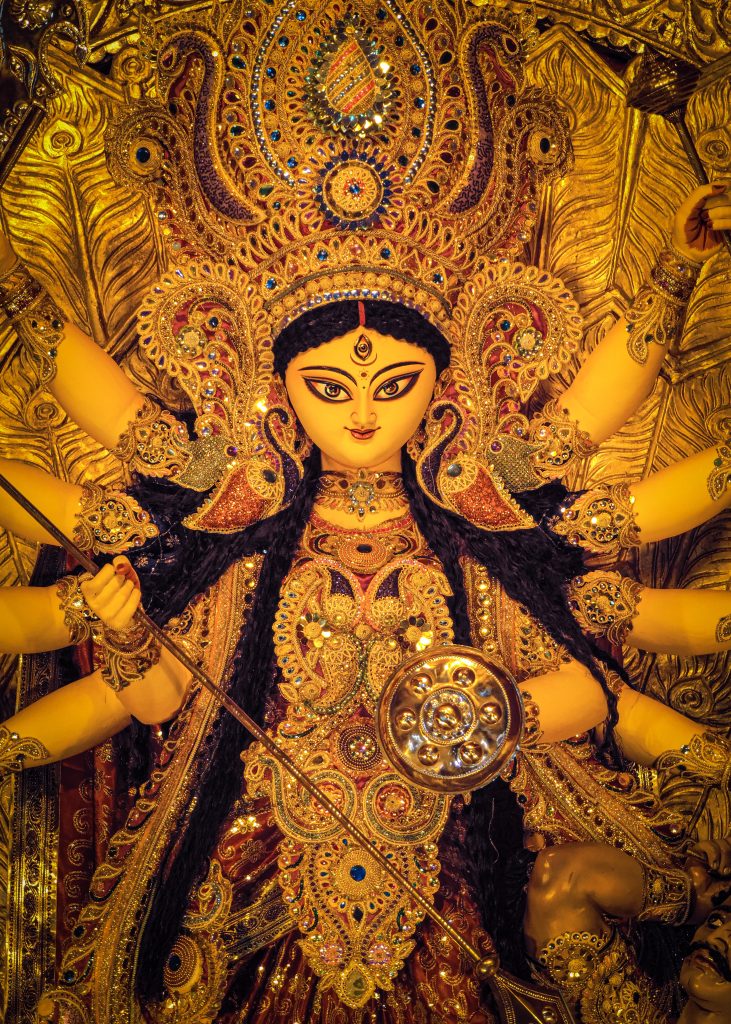
The different ethno- verbal groups of Tripura have given rise to a compound culture. The major Tripuri clans are Tripura, Debbarma, Jamatia, Reang, Noatia, and Murasing. And there are ethnical groups similar as Chakma, Halam, Garo, Kuki, Mizo, Uchoi, Dhamai, Roaza, Mogh Munda, Oraon and Santhal who migrated in Tripura as tea labourers. Bengali people represent the largest ethno- linguist community of the state. Bengali culture, as a result, is the mainnon-indigenous culture. The Tripuri Maharajas were great patrons of Bengali culture, especially literature; Bengali language replaced Kokborok as the language of the court. rudiments of Bengali culture, similar as Bengali literature, Bengali music, and Bengali cookery are wide, particularly in the civic areas of the state.
Tripura is noted for bamboo and club crafts. Bamboo, wood and club are used to produce an array of cabinetwork, implements, hand- held suckers, clones, mats, baskets, icons and interior decoration accoutrements. Music and cotillion are integral to the culture of the state. Some original musical instruments are the sarinda, chongpreng( both string instruments), and sumui( a type of flute). Each indigenous community has its own force of songs and balls performed during marriages, religious occasions, and other fests. The Tripuri and Jamatia people perform goria cotillion during the Goria puja. Jhum cotillion ( also called tangbiti cotillion ), lebang cotillion , mamita cotillion , and mosak sulmani cotillion are other Tripuri cotillion forms. Reang community, the second largest listed lineage of the state, is noted for its hojagiri cotillion that’s performed by youthful girls balanced on earthen ewers. Bizhu cotillion is performed by the Chakmas during the Bizhu jubilee( the last day of the month of Chaitra in Hindu timetable). Other cotillion forms include wangala cotillion of the Garo people, hai- hak cotillion of the Halam branch of Kuki people, and sangrai cotillion and owa cotillion of the Mog. Alongside similar traditional music, mainstream Indian musical rudiments similar as Indian classical music and cotillion , Rabindra Sangeet are also rehearsed. Sachin Dev Burman, a member of the royal family, was a maestro in the filmi kidney of Indian music.
Hindus believe that Tripura Sundari is the patron goddess of Tripura and an aspect of Shakti. 30 Durga Puja, Kali Puja, Dolyatra, Ashokastami and the deification of the Chaturdasha divinities are important carnivals in the state. Some carnivals represent convergence of different indigenous traditions, similar as Ganga puja, Garia puja, Kharchi puja and Ker puja. Unakoti, Pilak and Devtamura are major spots where large collections of gravestone busts and gemstone puppets are noted. Like Neermahal is a artistic Water Palace of this state. Puppets are substantiation of the presence of Buddhist and Brahmanical orders for centuries, and represent a rare cultural emulsion of traditional systematized persuasions and ethnical influence.
Performing trades : Tripuri cotillion
Tripura had a wide collection of notable art and artistic displays.
Mamita cotillion A Tripuri cotillion form performed during Mamita occasion, which is after the harvesting of time’s first crops and to worship Ama Mailuma.
Goria cotillion Tripuri cotillion performed during Goria puja.
Hojagiri cotillion A godly Tripuri cotillion form. The cotillion is performed on the occasion of Hojagiri carnivals or Laxmi Puja, held in the following full moon night of Durga Puja. generally after 3rd day of Dashera. The Goddess Mailuma( Tipra Indigenous Goddess) is worshipped on this day.
Lebang cotillion A Tripuri cotillion form.
Mosak Sulmani cotillion A Tripuri cotillion form.
Jadu Kolija A Tripuri folk-classical song.
Dangsa Mwsamung A type of Tripuri play performed on stage.
Other cotillion forms of nonage groups include Sangrai cotillion and Owa cotillion of Mog, Hai- hak cotillion of Halam, Wangla cotillion of Garo, Bizhu cotillion of Chakma. Alongside similar traditional music, mainstream Indian musical rudiments similar as Indian classical music and cotillion are also rehearsed. Sachin Dev Burman, a member of the Tripuri royal family, was a maestro in the filmi kidney of Indian music.
Original musical instruments are
sarinda : A Tripuri string instrument.
chongpreng : Tripuri string instrument.
sumui : Tripuri flute.